
Liposuction remains one of the most effective body contouring procedures available in aesthetic surgery, especially as techniques continue to evolve in 2026. While the procedure has become safer, more precise, and more customizable, one concern remains at the top of many patients’ minds: loose skin after liposuction. Patients often ask whether removing fat will automatically tighten the skin or if they will be left with sagging, uneven contours once the swelling subsides.
Understanding the effects of loose skin after liposuction is crucial for anyone considering body contouring.
Patients frequently inquire about the relationship between fat removal and loose skin after liposuction.
Addressing loose skin after liposuction is essential for achieving the desired aesthetic outcome.
The truth is that liposuction results are shaped just as much by your skin as they are by fat removal. Skin elasticity plays a central role in determining how smooth, firm, and sculpted your final outcome will be. While liposuction can dramatically improve body proportions, it cannot override the biological limits of your skin. Understanding how skin behaves before and after fat removal is essential to deciding whether liposuction alone is the right choice—or whether additional treatments should be part of your plan.
This 2026 guide is designed to explain, in detail, how skin elasticity affects liposuction results, why loose skin can occur, and what modern options exist to prevent or correct it. The goal is not to oversimplify the issue, but to give you realistic, actionable knowledge so your results align with your expectations.
The concern about loose skin after liposuction is prevalent among potential candidates.
Evaluating the causes of loose skin after liposuction can help in planning effective treatments.
Why Loose Skin Can Appear After Liposuction
Liposuction works by permanently removing fat cells from targeted areas of the body. Once those fat cells are gone, they do not regenerate. However, fat removal alone does not address the skin that once stretched to accommodate that volume. After the fat is removed, the skin must naturally contract to fit the new underlying shape. Whether this happens smoothly depends on skin quality, elasticity, and overall tissue health.
Loose skin after liposuction is not considered a surgical complication. Instead, it is a predictable outcome based on pre-existing skin conditions. If the skin is thick, elastic, and resilient, it tends to retract evenly over time. If the skin has been overstretched or weakened, it may struggle to adapt, resulting in laxity, waviness, or folds.
Factors contributing to loose skin after liposuction include age and genetic predisposition.
Understanding skin elasticity is vital for those worried about loose skin after liposuction.
Age-related changes can significantly affect loose skin after liposuction.
Many patients experience loose skin after liposuction due to various factors, including genetics and lifestyle.
This is why two individuals undergoing the same procedure can have completely different outcomes. Liposuction does not improve the skin’s ability to tighten—it simply reveals how well the skin was prepared to do so in the first place.
Understanding Skin Elasticity: What It Really Means
The relationship between fat removal and loose skin after liposuction is complex.
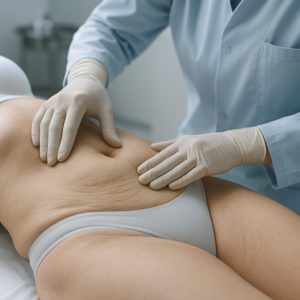
Skin elasticity refers to the skin’s ability to stretch and return to its original shape. This function is primarily controlled by collagen and elastin fibers found in the dermis. Collagen provides structure and firmness, while elastin allows the skin to rebound after being stretched. When both are present in healthy amounts, the skin can adapt well after liposuction.
As part of the natural aging process, collagen production decreases and elastin fibers become less organized. External factors such as sun damage, smoking, dehydration, inflammation, and chronic stress can accelerate this decline. Weight fluctuations and pregnancy can also stretch the skin beyond its ability to fully recover.
Identifying areas prone to loose skin after liposuction can guide surgical decisions.
In 2026, aesthetic planning takes skin elasticity far more seriously than in previous years. Cosmetic surgeons now evaluate skin thickness, tone, stretch history, texture, and recoil rather than assuming tightening will simply occur. This shift has helped reduce dissatisfaction and improve long-term outcomes by aligning treatment recommendations with each patient’s biology.
Key Factors That Influence Skin Tightening After Liposuction
Age and Biological Aging
Age remains an important factor, though it is not the only one. Younger patients often have higher collagen reserves, which improve the skin’s ability to retract. However, age alone does not dictate outcomes. A younger patient with a history of significant weight changes may have poorer elasticity than an older patient who maintained stable weight and skin health over time.
Understanding the differences between liposuction and treatments for loose skin after liposuction is key for patients.
Some patients may assume liposuction will eliminate concerns about loose skin after liposuction.
As patients enter their mid-thirties and beyond, the skin’s recovery response becomes slower. This does not mean liposuction is ineffective—it simply means the treatment plan may need to be more conservative or combined with skin tightening strategies.
For individuals with good skin quality, liposuction may address concerns about loose skin after liposuction.
Amount of Fat Removed
The volume of fat removed significantly impacts how much work the skin must do afterward. Removing a large amount of fat in a short period increases the demand placed on the skin to retract. This can overwhelm weaker skin, resulting in looseness. Balanced, strategic fat removal tends to create smoother results than overly aggressive suction in a single area.
Skin Thickness and Texture
Thicker skin tends to retract more successfully than thin skin. Areas such as the abdomen and flanks generally respond better than delicate regions like the arms or inner thighs. Stretch marks—especially pale or silvery ones—often indicate reduced elasticity and signal that tightening may be limited.
Areas Most Likely to Show Loose Skin After Liposuction
Some regions of the body are more prone to laxity regardless of overall health. The lower abdomen is particularly vulnerable due to gravity, pregnancy-related stretching, and aging. Even when fat is removed successfully, the skin may remain loose if underlying support has been compromised.
The arms are another high-risk area. The skin here is thin and constantly affected by movement and gravity. Even modest fat removal can reveal sagging tissue if elasticity is insufficient.
Many factors determine if loose skin after liposuction can be improved with non-surgical options.
Moderate to severe loose skin after liposuction may necessitate further intervention.
Inner thighs, knees, and the lower back may also show laxity, especially in patients with previous weight loss. These areas require careful assessment to determine whether liposuction alone will produce the desired appearance.
Liposuction vs. Skin Tightening: What’s the Difference?
One of the most common misunderstandings is assuming liposuction tightens the skin. While mild tightening may occur naturally, liposuction itself does not stimulate collagen production or physically tighten tissue. Any tightening seen after surgery is due to the skin’s natural recoil, not the procedure itself.
In 2026, many patients combine liposuction with Medspa skin-tightening technologies that support collagen remodeling. These treatments may be non-surgical or minimally invasive and are selected based on the degree of laxity present. However, it is important to note that no non-surgical treatment can replace the results of skin removal when excess skin is significant.
When Liposuction Alone Is Enough
Liposuction alone can produce excellent results in patients with good skin elasticity, minimal laxity, and modest fat deposits. These patients typically notice gradual tightening over several months as swelling subsides and collagen remodeling occurs.
Patients often wonder if loose skin after liposuction can improve on its own.
Patients who benefit most from standalone liposuction typically have:
- Stable body weight
- Minimal skin folding at rest
- Few stretch marks in treatment areas
- Good overall skin thickness
Awareness of the need for skin tightening may arise from experiencing loose skin after liposuction.
In these cases, liposuction acts as a refinement tool rather than a reconstructive one.
When Loose Skin Indicates Additional Treatment Is Needed
When skin laxity is moderate to severe, liposuction alone can expose looseness rather than improve appearance. In such situations, adding skin-focused treatments is often recommended to avoid dissatisfaction.
Non-surgical tightening may benefit patients with mild to moderate laxity, though results are gradual and subtle. For more advanced cases, surgical skin removal procedures—such as tummy tuck, arm lift, or thigh lift—provide definitive correction by removing excess tissue and repositioning the skin.
Choosing the appropriate approach is less about preference and more about anatomy. Addressing both fat and skin yields the most harmonious results.
Timeline: How Skin Changes After Liposuction
Immediately after surgery, swelling may exaggerate looseness or irregularity. This is temporary. During the first six weeks, inflammation decreases and tissue begins to settle. Skin tightening becomes more noticeable between two and three months post-op.
Post-operative care is crucial to manage loose skin after liposuction.
Long-term outcomes for loose skin after liposuction depend on various factors including weight maintenance.
Collagen remodeling continues for up to a year, meaning the skin’s appearance improves gradually over time. Patients should avoid judging results too early, as premature conclusions often lead to unnecessary worry.
Can Loose Skin Improve Naturally Over Time?
Mild skin laxity often improves without intervention, especially in patients with decent baseline elasticity. Hydration, compression garments, balanced nutrition, and consistent movement all support better tissue recovery.
However, severely overstretched skin rarely tightens dramatically on its own. In these cases, waiting indefinitely may not lead to meaningful change, and corrective treatments may be necessary for optimal contouring.
Who Should NOT Get Liposuction Alone
Liposuction alone is not ideal for everyone. Patients with significant skin redundancy, poor elasticity, or extensive stretch marks may not achieve smooth results without skin removal.
Individuals who have recently undergone major weight loss should allow their weight to stabilize before pursuing liposuction. Continuing weight changes can worsen laxity and compromise results.
Patients expecting liposuction to tighten skin dramatically—or replace the need for a tummy tuck or lift—are often better served by alternative procedures tailored specifically to skin correction.
Realistic Case Scenarios: How Post-Lipo Skin Results Vary by Patient
A patient in their early thirties with localized abdominal fat and good tone often sees excellent tightening after liposuction alone. In contrast, a patient after multiple pregnancies with loose lower abdominal skin may require a tummy tuck to achieve comparable smoothness.
Similarly, a physically active individual with stubborn flank fat typically responds well to liposuction, while someone with thin, gravity-affected arm skin may need an arm lift for satisfactory outcomes.
Long-Term Maintenance of Liposuction Results
Maintaining a stable weight is the single most important factor in preserving lipo results. While removed fat cells do not return, remaining fat cells can expand with weight gain, stretching the skin again.
Consistent exercise, hydration, and skincare help support long-term firmness. Aging continues, but thoughtful surgical planning can significantly delay visible changes.
Skin Elasticity Testing During Consultation: What Surgeons Look For in 2026
By 2026, evaluating skin elasticity before liposuction will have become a critical part of surgical planning rather than an afterthought. During consultation, experienced cosmetic surgeons assess how the skin behaves under light tension, how quickly it rebounds, and whether laxity is present when standing versus lying down. These observations help predict whether the skin will conform smoothly after fat removal or whether looseness may become more visible once swelling resolves. Surgeons also factor in a patient’s stretch history and overall skin quality to determine whether liposuction alone is appropriate or if additional tightening measures may be required for optimal results.
The Role of Compression Garments in Skin Retraction
Compression garments are often underestimated, yet they play an essential role in shaping outcomes after liposuction. These garments reduce swelling, support healing tissues, and help the skin adhere to the new underlying contour as inflammation resolves. While compression does not “tighten” the skin in a permanent sense, it encourages smoother contraction during the early healing phase.
In summary, loose skin after liposuction should be considered in the context of overall body contouring goals.
Ultimately, the focus on loose skin after liposuction enhances overall satisfaction with surgical outcomes.
Inconsistent garment use can lead to uneven pressure, fluid retention, or delayed adaptation of the skin. Patients who follow garment guidelines closely tend to experience a more uniform appearance as their body heals. By contrast, improper or early discontinuation of compression can cause prolonged swelling, which may exaggerate the appearance of looseness even if the skin is capable of retracting.
In 2026, garment protocols are customized based on treatment area, skin quality, and volume of fat removed. This individualized approach improves comfort while maximizing the body’s natural tightening response over time.
Nutrition, Hydration, and Their Impact on Skin Recovery
Skin recovery after liposuction depends not only on surgery, but also on how well the body is supported afterward. Collagen production requires adequate protein intake, vitamins, and hydration. When nutritional needs are neglected during recovery, the skin may heal more slowly and with less resilience.
Hydration helps maintain skin elasticity by supporting cellular repair and circulation. Dehydrated skin is less pliable and more prone to appearing thin or crepey. Proper fluid intake, combined with balanced nutrition, supports gradual tightening as swelling subsides and tissues reorganize.
While supplements alone cannot reverse poor elasticity, a supportive recovery environment allows the skin to perform at its biological best, particularly during the first few months after surgery.
Why Weight Stability After Liposuction Matters for Skin Tightness
Weight stability is one of the most overlooked factors affecting long-term skin quality after liposuction. Significant fluctuations following surgery can stretch the skin again, undoing early tightening and increasing the risk of laxity. Even moderate weight gain can cause remaining fat cells to expand, pushing against the skin and compromising firmness.
For patients who maintain a stable weight, results tend to mature gracefully. The skin has time to adjust to the new body contour, and collagen remodeling continues more effectively. In contrast, repeated weight changes can overwhelm the skin’s capacity to adapt, leading to sagging over time.
This is why surgeons increasingly emphasize lifestyle readiness—not just procedural eligibility—during consultation. Liposuction produces the best outcomes when paired with sustainable habits rather than short-term weight goals.
The Psychological Side of Loose Skin Expectations
Another important aspect of loose skin after liposuction is expectation management. Many patients associate fat removal with an automatic tightening effect, often influenced by highly edited images seen online. When reality does not match those expectations, dissatisfaction can occur even when results are anatomically appropriate.
Understanding before surgery what liposuction can and cannot accomplish is essential. Liposuction improves contour by reducing volume—it does not reverse years of skin stretching or aging. When patients enter surgery informed and prepared, outcomes are evaluated more realistically and satisfaction rates remain higher.
The most successful transformations happen when patients and surgeons share clear, aligned goals based on anatomy rather than assumptions.
Final Perspective: Why Skin Matters as Much as Fat Removal
In 2026, liposuction is no longer viewed as a standalone solution, but as one component of comprehensive body contouring. Fat removal creates opportunity, but skin quality determines execution. Loose skin after liposuction is not a surprise when it is evaluated honestly—and it is far less likely when treatment plans are built around both fat and skin behavior.
By prioritizing elasticity assessment, realistic expectations, supportive recovery, and long-term weight stability, patients can achieve smoother, more consistent results that age gracefully over time.