
Major body changes—whether from pregnancy, significant weight loss, or the natural aging process—don’t just change the number on the scale. They change how skin behaves, how fat is distributed, and how the body holds its shape. For many patients, these changes lead to persistent loose skin that simply doesn’t respond to exercise, nutrition, or even weight stabilization.
Two of the most common surgical options for addressing this loose skin are tummy tuck surgery and lower body lift vs tummy tuck surgery. While the procedures are often mentioned together, understanding the difference between a tummy tuck and a lower body lift vs tummy tuck is critical for setting realistic expectations and achieving balanced, natural-looking results in 2026 and beyond. Many patients find that a lower body lift vs tummy tuck procedure offers distinct benefits depending on their body type and goals.
Why These Body Contouring Procedures Are Gaining Popularity in 2026
In 2026, the conversation around body contouring has shifted from quick fixes to long-term structural solutions. Patients are more informed, results-driven, and focused on procedures that align with health, longevity, and body integrity. This evolution has fueled increased interest in surgeries like tummy tucks and lower body lifts.
Understanding the differences between a lower body lift vs tummy tuck can significantly impact the choices patients make regarding their body contouring journey.
Modern techniques prioritize natural contours, balanced proportions, and sustainable results rather than overly aggressive tightening. This shift reflects a broader cultural focus on wellness, intentional transformation, and treatments that respect the body’s natural anatomy.
As a result, procedures once considered extreme are now viewed as logical next steps for patients who have already invested in weight loss and lifestyle changes. Understanding these trends helps patients choose procedures that match both their physical needs and long-term goals.
What a Tummy Tuck Is Designed to Do
A tummy tuck, medically referred to as abdominoplasty, is a surgical procedure that focuses specifically on improving the front of the abdominal area. Its primary goals are to remove excess skin, address localized fat, and repair weakened or separated abdominal muscles.
This separation of the abdominal muscles—often caused by pregnancy or major weight fluctuations—can create a persistent bulge even in patients who are otherwise lean. A tummy tuck surgically restores core integrity while smoothing the overlying skin, creating a flatter and more structured abdominal contour.
What’s important to understand is that a tummy tuck is not a weight-loss operation. Instead, it’s a contouring procedure meant for patients who are already close to their ideal weight but struggle with lax skin and muscle weakness concentrated in the abdomen.
Areas a Tummy Tuck Can—and Cannot—Address
A tummy tuck is highly effective within its scope, but that scope is deliberately limited. The procedure focuses on the area between the ribcage and the pubic region, primarily improving the lower abdomen and, in full tummy tuck cases, the upper abdomen as well.
This means a tummy tuck can significantly improve loose skin, stretch marks below the belly button, and abdominal projection caused by muscle separation. However, it does not correct laxity that wraps around the waist, affects the flanks extensively, or impacts the lower back and buttocks.
This distinction becomes especially important in patients who have lost a large amount of weight and notice excess skin not only in the front, but also along the sides and back of the body.
Understanding the Different Types of Tummy Tucks
Not every tummy tuck looks the same. The type of tummy tuck recommended depends on how much skin excess is present and where it is located.
Minicirugía estética de abdomen
A mini tummy tuck is designed for patients with mild skin laxity below the belly button only. It does not involve repositioning of the navel or comprehensive muscle repair.
Full Tummy Tuck
A full tummy tuck addresses both upper and lower abdominal skin and includes tightening of the abdominal wall.
Abdominoplastia ampliada
For patients with some side laxity but not full circumferential skin excess, an extended tummy tuck may be recommended. While this approach improves the flanks more than a traditional tummy tuck, it still does not address the back or buttocks the way a lower body lift does.
What a Lower Body Lift Actually Involves
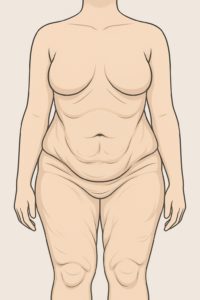
A lower body lift is a far more comprehensive procedure designed for patients with circumferential skin laxity—meaning loose skin that affects the front, sides, and back of the lower torso.
Patients often weigh the benefits of a lower body lift vs tummy tuck to determine which procedure aligns better with their desired outcomes.
Instead of focusing on the abdomen alone, a lower body lift removes excess skin in a continuous pattern around the waistline. This allows surgeons to reshape the abdomen, cinch the waist, lift the buttocks, and smooth the upper thighs in a single, unified operation.
This procedure is particularly transformative for patients who have experienced massive weight loss and feel that their body no longer reflects their health or effort due to excess skin.
Areas Improved by a Lower Body Lift
Ultimately, understanding lower body lift vs tummy tuck helps patients make informed decisions for their body transformations.
The defining feature of a lower body lift is its 360-degree correction. The procedure addresses the abdomen similarly to a tummy tuck but extends its benefits far beyond that region.
Patients typically see improvement in the flanks, lower back, waistline, buttocks, and outer thighs. By lifting and tightening tissue circumferentially, the body appears more balanced and proportionate, rather than flattened in one area and loose in another.
This is what makes the lower body lift uniquely suited for advanced skin laxity that cannot be solved with abdominal surgery alone.
Key Differences Between a Lower Body Lift and a Tummy Tuck
The choice between a lower body lift vs tummy tuck can be determined by the extent and area of skin laxity, as both procedures cater to different needs.
At their core, the difference between these procedures comes down to extent and intention. A tummy tuck is targeted and localized, while a lower body lift is global and structural.
Lower Body Lift vs Tummy Tuck: Understanding Your Options
Considering the implications of a lower body lift vs tummy tuck can help patients navigate their options effectively.
Patients who undergo a tummy tuck when they actually need a lower body lift may end up with an improved abdomen but persistent loose skin elsewhere—especially around the waist and back. Conversely, a lower body lift would be excessive for someone whose skin laxity is limited to the abdomen.
Choosing the correct procedure ensures the final result looks intentional, proportional, and complete.
How Weight Loss Patterns Influence the Right Surgical Choice
Not all weight loss affects the body in the same way, which is why choosing between a tummy tuck and a lower body lift must take your weight-loss journey into account. Patients who lose a moderate amount of weight—often due to lifestyle changes or pregnancy-related weight fluctuations—tend to experience skin laxity primarily in the abdominal area. In these cases, a tummy tuck is often enough to restore a smoother, firmer contour.
However, patients who experience significant or rapid weight loss, including those who lose weight after bariatric surgery or GLP-1 medications, often develop circumferential skin laxity. This means the skin becomes loose not just in front, but along the waistline, lower back, hips, and buttocks. A tummy tuck alone may flatten the abdomen but leave excess tissue elsewhere, creating an unbalanced appearance.
Patients should always consider their options carefully when choosing between lower body lift vs tummy tuck.
Understanding how your body changed during weight loss is key. If your skin pulls downward when standing or bunches at the sides and back, a lower body lift may be the more appropriate option for achieving a cohesive, natural-looking result.
By evaluating their condition, individuals can decide whether a lower body lift vs tummy tuck is the best approach for their unique situation.
Who Is an Ideal Candidate for a Tummy Tuck?
Exploring the nuances of lower body lift vs tummy tuck allows for more personalized care and expected outcomes.
Ideal tummy tuck candidates are individuals with localized abdominal laxity who have maintained a stable weight for several months. These patients often have good skin elasticity elsewhere and do not experience significant sagging around the back or hips.
Pregnancy-related changes, moderate weight loss, or genetics are common reasons someone may need a tummy tuck. When skin and muscle laxity are confined to the abdomen, this procedure can deliver dramatic, satisfying results without the need for more extensive surgery.
Who Benefits Most From a Lower Body Lift?
The decision should involve assessing the advantages of both lower body lift vs tummy tuck to ensure the most effective treatment.
Lower body lift candidates typically have widespread skin laxity due to major weight loss or long-term obesity followed by transformation. The excess skin often interferes with clothing fit, hygiene, physical comfort, and overall confidence.
These patients usually find that a tummy tuck alone would not align with their goals, as the remainder of the torso still appears loose. For them, the lower body lift restores harmony across the entire lower frame of the body.
Emotional and Functional Benefits of Body Contouring Beyond Appearance
By weighing the pros and cons of lower body lift vs tummy tuck, patients can better understand which option is more suitable for them.
While aesthetic improvement is a major motivation for both procedures, the emotional and functional benefits are just as significant—especially for lower body lift patients. Excess skin can cause discomfort during movement, interfere with clothing choices, and lead to frequent skin irritation. Removing this tissue often restores ease of movement and physical freedom patients haven’t experienced in years.
Psychologically, many patients describe a renewed sense of closure after surgery. After investing significant effort into weight loss or body transformation, excess skin can feel like a lingering reminder of the past. Addressing it allows patients to fully embrace their progress and feel aligned with their new lifestyle.
These benefits extend beyond mirrors and measurements. Improved confidence at the gym, comfort in fitted clothing, and a greater sense of ownership over one’s body all contribute to long-term satisfaction following either procedure.
Ultimately, the choice between lower body lift vs tummy tuck is a personal one that should be made with careful consideration.
Recovery Expectations and Lifestyle Considerations
Recovery is another important difference between these surgeries. While both require downtime, a lower body lift involves a longer healing process due to the size of the surgical area.
Whether opting for a lower body lift vs tummy tuck, the goal remains the same: achieving a body that reflects one’s hard work and transformation.
Patients undergoing a tummy tuck usually return to light activities within two weeks, while lower body lift patients might need additional time before resuming work or normal routines. Compression garments, limited movement, and gradual activity reintroduction are essential in both cases.
Understanding recovery expectations upfront helps patients choose the procedure that fits not only their physical needs, but their lifestyle as well.
Scarring Differences: What Patients Should Realistically Expect
As you explore lower body lift vs tummy tuck options, remember that each procedure has its unique advantages.
Scarring is a common concern for patients considering either a tummy tuck or a lower body lift, and the location and length of incisions vary significantly between the two procedures. With a tummy tuck, scars typically remain along the lower abdomen and can often be concealed beneath underwear or swimwear. Over time, these scars tend to fade and flatten with proper care.
A lower body lift involves longer incisions that extend around the waistline. While this may sound intimidating, skilled surgical planning ensures scars are positioned strategically to remain discreet under clothing. The trade-off is a more comprehensive correction of loose skin, particularly beneficial for patients whose concerns extend beyond the front of the abdomen.
It’s important for patients to understand that scar quality is influenced by genetics, skin type, adherence to post-operative care instructions, and overall health. When expectations are realistic, scars are often viewed as a worthwhile exchange for improved comfort, mobility, and confidence.
Long-Term Results and Skin Behavior
Understanding the facts about lower body lift vs tummy tuck will guide patients in their journey to rejuvenation.
Both procedures remove skin permanently, but results depend heavily on weight stability. Significant fluctuations in weight after surgery can compromise outcomes, regardless of which procedure is chosen.
Lower body lift results are often perceived as longer-lasting simply because the correction is evenly distributed. Instead of placing all tension on one region, the skin is lifted and reshaped holistically, reducing the chance of future imbalance.
Can One Procedure Lead to Another in the Future?
Some patients wonder whether starting with a tummy tuck now could later require a lower body lift—or vice versa. While this is possible, proper surgical planning helps minimize the need for future corrective procedures. Choosing the surgery that fully addresses your current anatomy reduces the likelihood of dissatisfaction or incomplete results.
For patients early in their weight-loss journey, surgeons may recommend delaying surgery until weight stabilizes. This ensures that the most appropriate procedure can be performed once the body’s contours are fully apparent. In some cases, a staged approach may be discussed, but this decision is highly individualized.
Open communication and realistic expectations play a pivotal role in long-term success. A carefully chosen procedure today can prevent unnecessary surgeries later and deliver results that age gracefully with your body.
Final Thoughts: Making the Right Choice Between Tummy Tuck and Lower Body Lift
There is not universally “better” option between a tummy tuck and a lower body lift—only the option that best matches your anatomy, skin condition, and goals. A careful evaluation of where excess skin exists, how it behaves when you move, and how your body has changed over time is essential. Choosing the correct procedure from the start reduces the risk of revision surgery and leads to results that feel complete, intentional, and empowering. Our experienced cosmetic surgeons in Fort Lauderdale can help you understand the difference and choose the best option for your body. Contact us today for a consultation.